DLP Tool Selection for Companies Without a Security Team
Lean teams should focus on deployability and channel coverage, not enterprise DLP features.
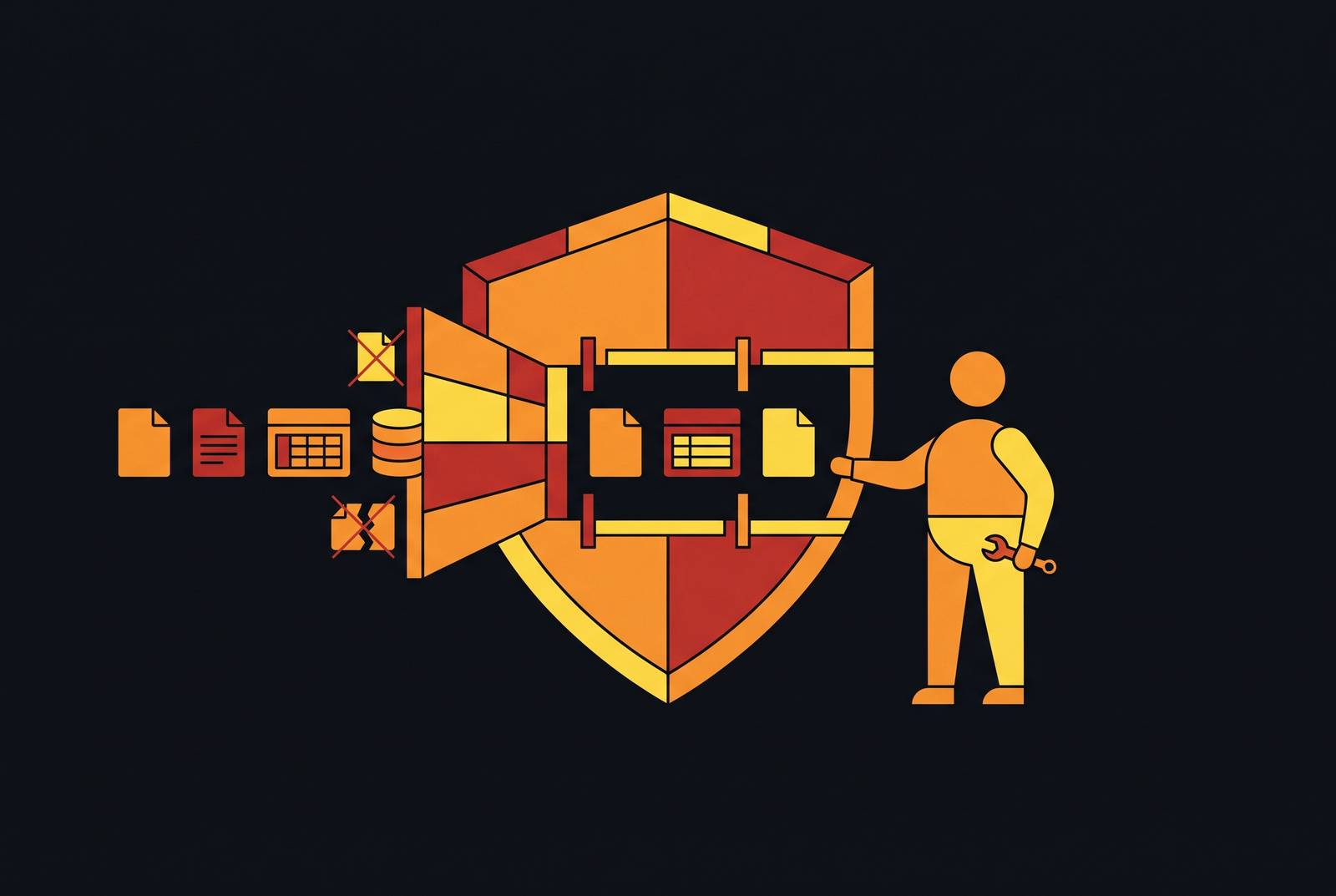
Most DLP tools were built for companies that have a dedicated security team. A lean organization that buys one of those tools gets something it cannot actually run. The choice that matters is not capability. It is whether one administrator can deploy the tool, tune it, and keep it running without help. This guide gives you the specific criteria to make that call.
Why DLP tools built for large security teams fail lean organizations
Symantec DLP (Broadcom), Trellix DLP, Forcepoint DLP, Digital Guardian (Fortra), and Proofpoint Enterprise DLP are priced and architected for large, regulated enterprises with dedicated IT staff and SOC teams. Each one carries a configuration and policy-tuning burden that assumes someone whose full-time job is to run DLP. Without that person, enforcement rarely moves out of monitor mode.
The evaluation framework most buyers encounter was built for the wrong reader. Standard analyst comparisons score on channel coverage, fingerprinting depth, and XDR integration. Those capabilities matter to a large SOC. They are irrelevant to an IT generalist managing a small company. Buying on those criteria produces a platform that is technically capable but operationally abandoned.
What DLP actually needs to do for a company running without security staff
The right question is not "what can this platform detect?" It is "which channels carry our actual risk, and can we enforce policy there without a specialist?" Data leaves through a small number of predictable channels: outbound email, cloud storage uploads, removable media, browser-based uploads, and increasingly, prompts into AI tools.
Endpoint agent DLP covers the gaps cloud DLP misses. Those gaps include clipboard activity, USB ports, browser uploads, and print jobs on local devices. AI tools have added a leak vector that did not exist in prior DLP frameworks. A developer pasting source code into a generative AI tool, or a finance employee uploading a payroll file, represents the same data-loss risk as an email attachment sent to the wrong address. Shadow AI discovery and AI data leakage are now core DLP concerns, not add-ons. A lean team needs to define which channels it is actually protecting before choosing a tool.
Effective DLP begins with data discovery, not policy deployment. Without a prior discovery step, policies are guesses. They protect the data the buyer imagined was sensitive, not the data that is actually at risk. Tools with built-in data discovery scan endpoints and cloud storage to locate PII, PCI, and PHI before a policy violation occurs. That closes the gap for teams that cannot run a manual classification project.
The five criteria that actually predict whether a DLP tool will work for a lean team
Five criteria determine whether a DLP tool will actually be deployed and enforced by a non-specialist team. Most buyers are not using them. Apply these in order. Criterion 1: How fast does it deploy without professional services?
Enterprise DLP implementations are measured in months. A lean team needs a tool that is enforcing policy in days. Deployment model matters. An endpoint agent pushed via MDM, a browser extension, or a native integration with an existing platform like Microsoft 365 each have different timelines and different coverage scopes. A tool that requires a multi-week professional services engagement to go live is not a realistic choice for a team without a project budget or a security architect. Criterion 2: Can one administrator run it without daily tuning?
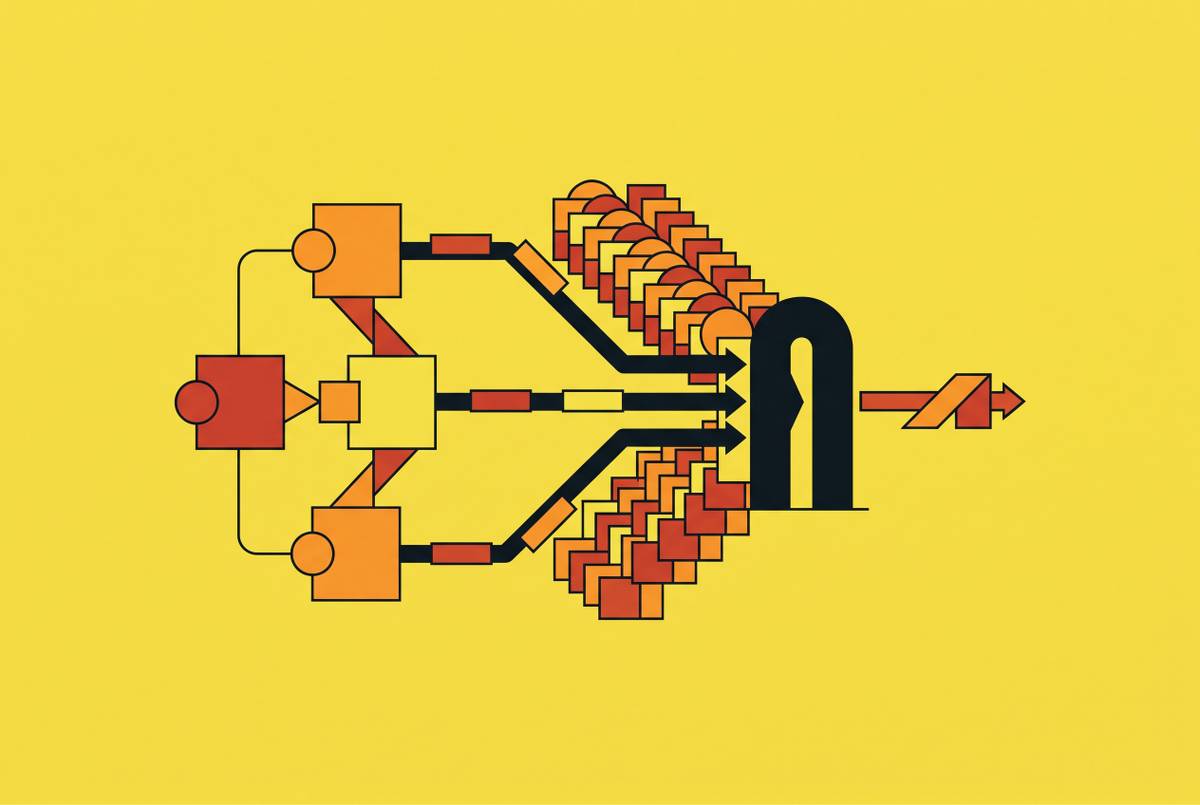
The hidden cost of DLP is not the license. It is the policy tuning and false-positive triage that consume more budget than the tool itself at lean-team scale. Traditional DLP built on regex and rule libraries requires ongoing tuning that a small team rarely has time for. The result is DLP that stays in monitor mode because no one has capacity to manage the noise. Tools that use AI-based classification rather than brittle regex reduce that tuning burden by classifying content accurately without manual rule maintenance. Teramind DLP combines behavior baselines with DLP, which can reduce false-positive volume by surfacing anomalies in context rather than flagging every pattern match. The operational test is simple: if a tool requires a dedicated analyst to review alerts daily, it will be abandoned or left in monitor mode quickly at a lean organization. Criterion 3: Does it cover the channels where your data actually moves?
Channel coverage must match the organization's actual data flow, not the full channel matrix an enterprise might need. For most SMBs, the priority channels are outbound email, cloud storage (Google Drive, OneDrive, Dropbox), browser uploads, removable media, and AI tool prompts. A tool with deep endpoint coverage but no email DLP is incomplete for an organization where email is the primary leak channel, and vice versa. CrowdStrike Falcon Data Protection is agent-based, covers GenAI controls and data flow context, and fits naturally for organizations already running the Falcon platform. It extends existing endpoint telemetry for data movement visibility rather than adding a separate tool. Criterion 4: Does it cover AI tools as a data channel?
Employees at lean organizations use ChatGPT, Claude, Gemini, and Copilot regularly, often for work tasks involving customer records, financial data, or source code. A DLP tool that does not inspect prompts and uploads to AI tools has a blind spot that grows every quarter as adoption increases. Microsoft Purview's GenAI DLP is strong. It applies policies on prompts, where DLP blocks prompt processing, while response-level detection is handled by Insider Risk and Communication Compliance policies. But shadow AI discovery and AI app governance are configurable and depend heavily on Edge browser integration, device onboarding, and the licensing tier in place. miniOrange DLP has a purpose-built integration for ChatGPT to monitor sensitive data inputs before they reach the model. The practical test is to ask any vendor whether their tool inspects the prompt content sent to external AI APIs, not just whether it can block the URL. Criterion 5: Does the reporting output satisfy compliance requirements without manual assembly?
For many lean teams, DLP is purchased primarily to satisfy a compliance requirement such as HIPAA, GDPR, or SOC 2. The audit evidence the tool produces matters as much as the protection it provides. A tool that logs violations but requires a security analyst to assemble them into audit-ready evidence is not a realistic fit for a team without that analyst. Compliance templates, pre-built sensitivity labels, and automatic audit log generation close this gap. Look for those specifically when compliance is the primary driver.
How the realistic shortlist maps to different lean-team situations
The right DLP tool depends on three variables: which platforms the organization already runs, how many people manage IT, and whether cloud or endpoint risk is the primary concern. The shortlist below maps tools to situations. For organizations already standardized on Microsoft 365: Microsoft Purview DLP is the lowest-friction starting point. It is built directly into Teams, SharePoint, Exchange, and OneDrive, with pre-built sensitivity labels and compliance templates connected to Microsoft's compliance center. Microsoft has expanded Purview to include pay-as-you-go options for non-Microsoft data sources, though organizations with significant non-Microsoft infrastructure should validate current connector coverage before assuming full parity. GenAI DLP is strong within the Microsoft ecosystem. Shadow AI discovery and AI app governance depend heavily on browser integration, with Edge natively supported plus the Microsoft Purview extension for Chrome and Firefox on Windows, and on device onboarding. Coverage outside the Microsoft stack is configurable rather than automatic. The practical first step is to start in alert-only mode for an initial period, review every alert manually, tune policies to eliminate false positives, then switch to blocking mode. A policy that blocks legitimate business activity on day one creates immediate operational friction.
For organizations already running CrowdStrike Falcon: CrowdStrike Falcon Device Control provides visibility into and control over peripheral devices, with a focus on removable media. It shows detailed information about device activity and files moved through those devices. The Falcon platform's endpoint telemetry, already deployed for threat detection, works as a natural complement to a cloud DLP layer rather than a replacement. Organizations with both endpoint and cloud risk may need to pair it with a SaaS-native tool. For SMBs without in-house expertise, CrowdStrike Falcon Complete Next-Gen MDR provides fully managed detection and response built on the Falcon platform, covering the operational gap that a lean team cannot fill.
For cloud-native SMBs without a strong Microsoft or CrowdStrike footprint: Nightfall AI is a cloud-native, AI-native DLP tool suited to organizations where sensitive data lives in cloud apps, SaaS, endpoints, browsers, and AI agent workflows. Netwrix Endpoint Protector covers cross-OS endpoint control, device control, and offline enforcement. It is practical for SMBs that need removable media control and compliance logs without enterprise complexity. miniOrange DLP covers endpoints, email, cloud apps, and networks from a single dashboard, at a price point and deployment speed that most enterprise-grade tools do not offer at this tier. It also offers native Atlassian DLP for software teams where sensitive project data lives in Confluence and Jira. Teramind DLP combines behavior baselines with DLP, which is well suited to insider-threat-heavy organizations, call centers, or finance teams where behavioral anomaly detection adds value beyond content inspection. Its lower-to-medium pricing tier makes it accessible for lean teams.
The deployment sequence that keeps DLP from stalling at day one
The most common DLP failure at lean organizations is not a wrong tool choice. It is a right tool deployed in the wrong order, producing noise that kills adoption before enforcement begins. DLP enforcement that blocks legitimate business activity on day one creates immediate pressure to disable or abandon the tool. The sequence of discovery, alert, tune, and then enforce is not optional for a small team with no tolerance for operational disruption.
Step one is to run data discovery before writing a single policy. You need to understand what sensitive data the organization actually holds and where it lives across endpoints, cloud storage, and email archives. This step also surfaces the highest-risk data stores, which should be the first policies written.
Step two is to establish identity and endpoint security foundations before DLP enforcement. MFA must precede DLP enforcement. Stolen credentials are the most common entry point, and DLP cannot compensate for an unprotected account. Pair DLP with endpoint detection and response (EDR) to catch behavioral anomalies that content inspection alone misses. A DLP program without a verified, isolated backup layer is incomplete. Ransomware attacks now target backup repositories directly, and DLP coverage alone does not protect data that has been encrypted rather than exfiltrated.
Step three is to start with a small number of high-value policies in alert-only mode. Focus the first policies on the two or three data types that carry the most regulatory or business risk, such as credit card numbers, Social Security numbers, or patient records. Do not try to classify everything at once. Run in alert-only mode for an initial period and review every alert manually to understand what normal data movement looks like before writing blocking rules. Tune policies to eliminate false positives before switching to blocking mode. The goal is a signal the team can act on, not volume that forces them to mute it.
Step four is to extend coverage to AI tools after core channels are stable. First define which AI tools employees are allowed to use and what categories of information can be entered into them. That is a policy decision, not a technical one, and it must be made before DLP rules can enforce it. Add AI channel coverage once email and endpoint policies are tuned and running stably. Layering AI governance on top of an unstable core policy set creates compounding noise.
When a managed DLP service is the more honest answer than a self-managed tool
For organizations with fewer than ten people handling IT, a managed DLP approach is often a faster and lower-risk path than a self-managed tool. Recognizing that boundary is itself a selection criterion. The license cost of a DLP tool is often the smaller line item. Policy tuning, false-positive triage, and ongoing management consume more budget and time than the tool itself at lean-team scale. If the team cannot staff the operational work that DLP requires, the tool will be purchased, partially deployed, and left in monitor mode, providing a false sense of coverage without actual enforcement.
A fully integrated security platform, one that combines device management, endpoint security, identity protection, and compliance automation, removes the need to select, connect, and manage DLP as a standalone tool. When DLP is built into the platform already managing endpoints and identity, policy enforcement is continuous and does not depend on a dedicated administrator to keep it running. This is the model that makes the most sense for founders, IT generalists, and operations leaders who need coverage without the headcount to build a security program from scratch. The alternative of hiring an in-house security specialist carries a first-year cost well above what most SMBs allocate to their entire security budget. Managed platform options cover the same enforcement surface without that overhead.
Before choosing a DLP tool, a lean team should ask whether it has the operational capacity to deploy, tune, and maintain a standalone tool. If the honest answer is no, the selection decision is not which tool. It is which integrated platform removes that burden. The five criteria still apply: deployment speed, administrator burden, channel coverage, AI channel coverage, and compliance reporting. The bar for each is simply higher when there is no dedicated security staff to compensate for tool gaps. Answer the capacity question first, then apply the criteria to whatever remains.