What a Fully Enforced Security Program Actually Looks Like Versus One That Is Still Warming Up
Mature programs compound improvements through continuous enforcement, not sporadic sprints.
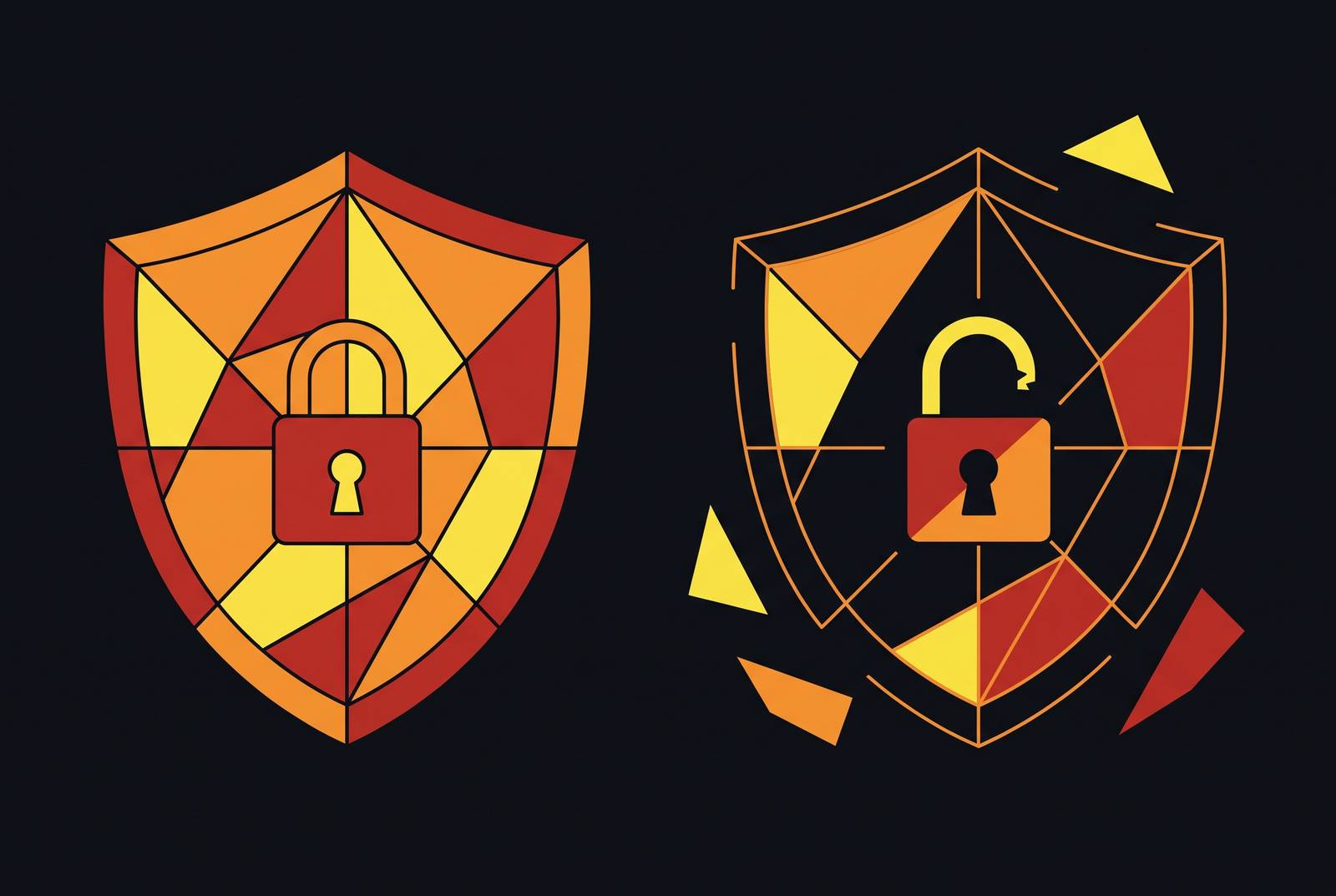
Most SMBs that have invested in security are not unprotected. They are stuck in a pattern where each improvement is real but none of it compounds. The remediation sprint brings exposure down, the sprint ends, the environment keeps moving, and six months later the next assessment looks like the first one. This article maps the difference between a program that runs and one that is still warming up.
Why security programs stall after the first sprint
The failure mode has a recognizable shape. An assessment comes back with findings, leadership funds a remediation sprint, the board chart shows exposure down, and everyone moves on. Six months later, the next assessment surfaces the same gaps in a new form. This is not negligence. Every project delivered what it promised. What the program lacks is a mechanism to make the same good decisions next month without a new mandate forcing the issue.
The distinction that matters is between a project and an operating model. A project gets an improvement. An operating model gets the ability to keep improving without a new initiative every time. Most small and mid-sized businesses have run several security projects. Fewer have built the operating model underneath them. The sawtooth pattern reflects a structural problem: companies often have the tools in place but lack a unified operating model to keep them enforced. Zip Security consolidates device management, identity protection, and compliance into a single system designed for businesses without a dedicated security team, which makes continuous enforcement feasible without rebuilding the program on each new cycle.
The five structural differences between a program that runs and one that resets
Five capabilities separate programs that compound their improvements from those that reset to baseline after every sprint. Each one is observable. A reader should be able to recognize their own program in one or more of these gaps.
Continuous scoping comes first. A project scopes once at kickoff. A mature program treats scope as something that moves with the business. An acquisition, a new cloud account, a vendor integration, a new product line. None of those wait for the next assessment, and each changes what the program should be protecting.
Repeatable risk decisions follow. An immature program prioritizes in a meeting. The ranking is often sound, but the criteria live in people's heads and cannot be reproduced, audited, or revisited when conditions change. Accepted risks quietly fall out of view.
Coordinated remediation ownership matters more than most teams admit. Without named owners and documented authority, findings route to whoever is available. The same root cause resurfaces because no one is accountable for closing it.
Verification and root-cause elimination separate mature programs from immature ones. Mature programs confirm that a fix worked and trace why the gap existed. Immature programs close tickets without checking whether the underlying condition changed.
Measurement over time is the final difference. Boards and regulators increasingly expect organizations to demonstrate security maturity through trend data, not a point-in-time compliance checkbox. After major breaches, forensic analysis typically reveals the problem was not missing technology but immature process: patching that did not happen, alerts that went uninvestigated, access controls that existed in policy but not in practice. Coordinated remediation ownership and repeatable risk decisions require systems that encode decisions and make accountability transparent. For SMBs without security staff, Zip Security automates owner assignment, tracks remediation across assets, and preserves decision criteria between cycles, removing the human dependency that causes mature programs to collapse into the sawtooth pattern.
What enforcement actually requires: identity, endpoints, and SaaS as the three live surfaces
A fully enforced program does not treat identity, endpoints, and SaaS as setup tasks. It runs continuous controls across all three because each surface changes constantly, so it cannot wait for the next project cycle. Enforcement means the controls are active and monitored continuously, not configured once.
Identity is the highest-leverage surface and the most commonly under-enforced one. MFA is the baseline, but the meaningful difference is how consistently it is enforced. That means every sign-in path, not just the obvious ones, with stronger authentication for privileged roles and conditional access to reduce risky logins. Least privilege drifts toward convenience in most SMB environments. Too many accounts accumulate admin access because speed matters. Service accounts with broad permissions and unclear ownership become long-lived access paths that nobody monitors. A mature program automates identity lifecycle management. Fast offboarding, quarterly access recertification, conditional access enforcement. Integrated platforms that bundle endpoint security with identity controls make this automation feasible for lean teams without requiring separate point tools and manual coordination.
Endpoints are the most mobile surface and the easiest to let drift out of policy. Hybrid environments move devices between home networks, airports, client sites, and shared workspaces. A single unmanaged device can become the entry point into cloud apps. EDR that can isolate a compromised device within seconds stops lateral movement from a single endpoint reaching the rest of the environment.
SaaS sprawl is the surface that grows fastest with the least visibility. Shadow apps, abandoned accounts, and permissive defaults expose sensitive data without appearing in any inventory. Cyber Advisors' 2026 trends analysis describes SaaS sprawl as a blind spot that a mature program converts into a managed surface through SSPM and disciplined ownership. A warming-up program discovers its SaaS exposure during a sprint and closes the obvious gaps. A mature program runs continuous scanning so new shadow apps surface before they accumulate into the next sprint's findings. Enforcement across these three surfaces only holds if monitoring and cadence sustain it.
Monitoring designed for action, not dashboards that go dark under pressure
Incidents in mature programs are rarely invisible before they spread. The difference is whether monitoring is designed so that signals produce action, not just noise that teams stop trusting. Effective monitoring is not the number of alerts or the breadth of log coverage. It is whether alerts are tuned to reflect real risk and whether ownership for triage is clear. That includes after-hours escalation, because an alert that matters at 2 p.m. matters at 2 a.m.
A warming-up program accumulates monitoring tools and alert streams. A mature program has tuned a narrower alert set to be truly actionable and has defined what happens when each fires. The human-versus-automation distinction matters here. Automated systems generate alerts, but human analysts determine severity and take containment action. Cyberattacks do not follow business hours. Unreviewed alerts during nights and weekends are an open window.
Without clear escalation paths and response windows, monitoring becomes a set of dashboards that nobody consults when pressure hits. That is precisely when it needs to work. Monitoring only matters if it feeds a documented response. The compliance landscape now demands evidence that the response exists.
How compliance frameworks now require evidence of continuous operation, not a point-in-time snapshot
The regulatory environment in 2026 has removed most of the grace period that let a point-in-time compliance posture pass as an adequate program. The expectation is now that controls are running every day and can produce evidence on demand. The grace period is over. The question is not whether external parties can tell the difference between a program that runs and one that does not. Regulators and insurers now require the program to prove it.
Compass MSP's 2026 compliance guide documents several completed phase-ins. NYDFS Part 500's Second Amendment completed its multi-year phase-in on November 1, 2025, when final requirements for expanded MFA and written asset inventories took effect. The first annual certification cycle covering the fully phased-in rules came due April 15, 2026. For covered entities, there are no remaining deadlines to hide behind. PCI DSS moved past its grace period. HIPAA penalties rose again, and a single breach can trigger multiple violation categories simultaneously. Failure to conduct a risk analysis remains one of the most common penalty triggers. CMMC Phase II certification requirements were suspended by the Department of War on July 13, 2026, but the underlying security requirement did not change.
Each of these changes rewards the same thing: a program that runs continuously and produces evidence on demand, rather than one that wakes up a few weeks before an audit. Cyber insurance underwriters have moved in the same direction. Premiums are now tied to control maturity and response readiness. The questionnaire functions as a de facto audit of whether MFA, EDR, immutable backups, and privileged access management are genuinely in place. The gap between a program that runs and one that does not now has a price.
What the gap costs when attackers find a program still warming up
Attackers have learned that a small business still running on project-based security is faster to breach and more likely to pay than a hardened enterprise. The financial consequences of that calculation are severe enough to threaten solvency for the smallest firms. The asymmetry is structural, not random.
Ransomware is the defining consequence for SMBs. It appeared in a large majority of SMB breaches in recent data, at a rate substantially higher than across all organizations combined. The attack vectors that exploit a warming-up program's gaps are identity-first. Compromised credentials, phishing, and VPN exploitation account for the overwhelming share of ransomware entry points. These are all surfaces that continuous enforcement specifically closes.
The skills shortage sustains the gap. The controls that stop most attacks are well understood: MFA everywhere, fast patching, monitored EDR, tested backups. What small businesses lack is the staff and process to run them every day. That is precisely the operating-model problem this article has been diagnosing. Relationship damage follows breach. A meaningful share of attacked small businesses lose a business partner or client as a direct result. The maturity gap is a commercial risk, not only a technical one. If the gap is this costly and the controls are well understood, the question is not what to do but how to make it run continuously without a dedicated security team.
How to move from a warming-up program to one that runs without a new mandate every quarter
The controls that close most of the maturity gap are not exotic. The barrier is building the ownership, cadence, and automation that keep them running when no one is launching a new initiative. Start with named owners and documented authority before adding more tools. A realistic small-business program does not need a full security operations center. It needs an executive decision-maker with a designated backup, a named IT lead or security platform contact, and pre-approved containment actions so that when something fires, the response does not require a meeting to authorize. Without this, even a well-configured toolset produces alerts that pile up and never close.
Continuous enforcement requires integration, not more vendors. The five capabilities that separate a mature program from a warming-up one all require that the same platform or team can see identity, endpoints, and SaaS simultaneously. A fragmented stack cannot produce the cross-signal visibility that makes any of those capabilities real.
Zip Security is built for this problem specifically. It brings device management, endpoint security, identity protection, and compliance automation into a single platform, deployed quickly, so that founders, IT generalists, and operations leaders can run a continuously enforced program without a dedicated security team or months of professional services. The platform replaces the fragmented stack that produces the sawtooth pattern. Instead of five tools that each require a specialist to tune and a sprint to reconnect, Zip Security is the operating model: fully managed, continuously enforced, and producing the evidence that regulators and insurers now require on demand. For SMBs evaluating where to put their first security dollar, the right question is not which point tools to buy but whether the program will keep running between initiatives. An integrated platform is the answer that does not require hiring a security team to sustain it.
Backup and tested recovery are the last line that a mature program verifies, not assumes. Securafy's 2026 SMB cybersecurity guide identifies immutable backups that cannot be altered or deleted, offsite storage, and regular restore testing with documented proof of recoverability as non-negotiable components. Ransomware operators increasingly target backup systems alongside primary data. A warming-up program configures backups. A mature program tests restores on a documented schedule and treats the test result as evidence, not an assumption. A fully enforced program is not a destination you reach once. It is the mechanism that keeps the gains from the last sprint from evaporating before the next one.
Sources
- What is Security Program Maturity? (June 2026)
- How Automated Enforcement Saves 20+ Hours a Week | Zip Security
- Security Policy Enforcement: Closing the Deployment Gap | Zip Security
- The 3-Step Path to Security Maturity | Zip Security
- Compliance Theater: Why Audits Pass and Breaches Happen | Zip Security