Access Review Automation in Managed IAM Services for SMBs
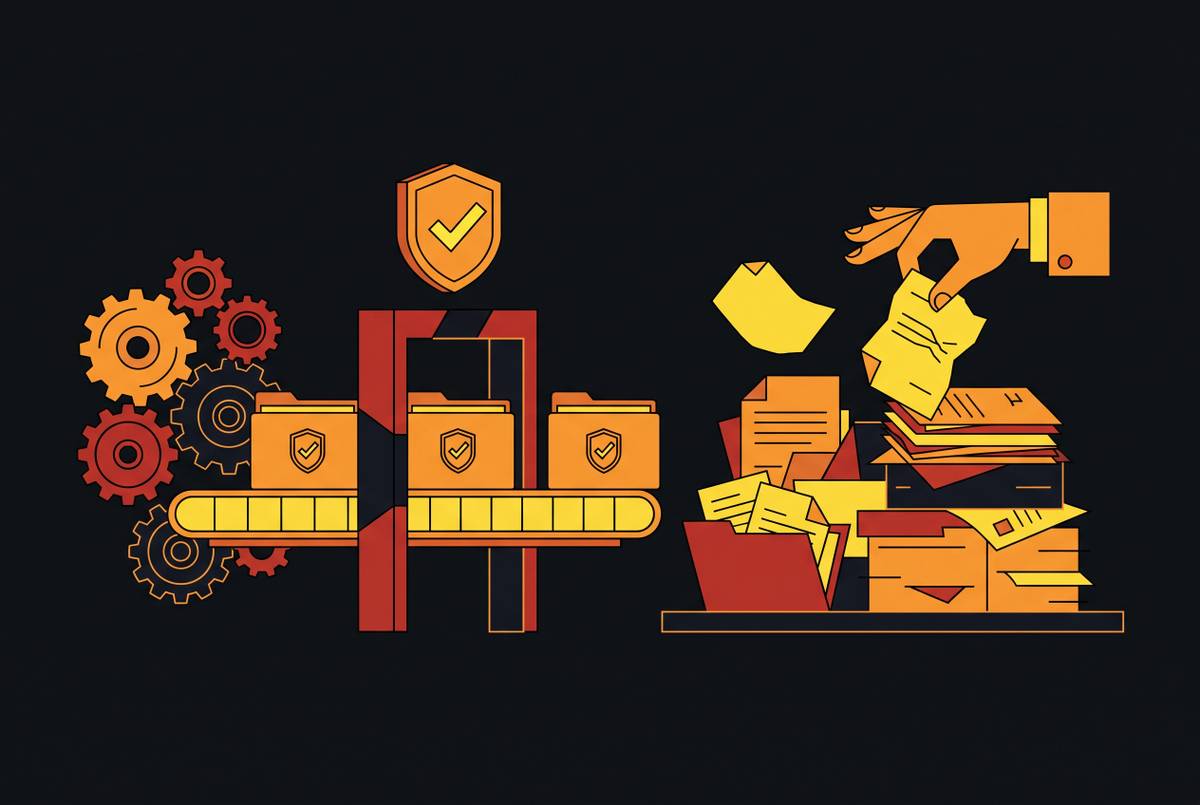
Automated access reviews replace yearly spreadsheets with continuous enforcement.
Access review automation replaces the spreadsheet-and-email ritual that most small businesses still run once a year, with software that checks who has access to what, continuously, and fixes it when the answer is wrong. That shift, from a once-a-year fire drill to an always-running check, is what "managed IAM" means for a company that has no identity team to speak of.
What access review automation does, and what it replaces
The old way looks something like this: IT sends a spreadsheet to a handful of managers, the managers mark columns yes or no, and IT manually goes in and revokes whatever got flagged. It's slow. It's inconsistent, because half the managers rush through it between meetings. And it leaves almost no record of why any decision got made.
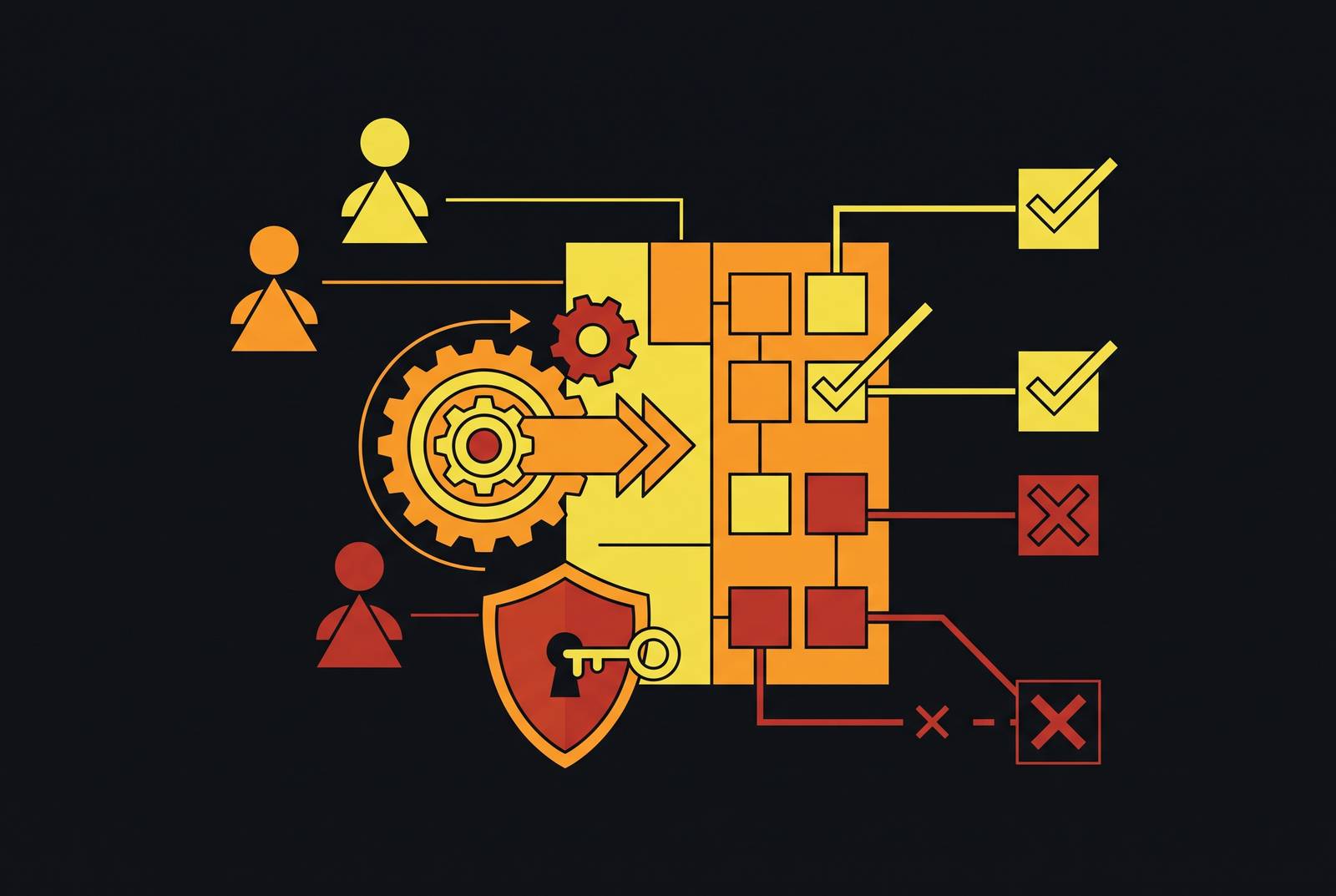
Automated access review skips the spreadsheet. Software sits on top of the SaaS apps, cloud infrastructure, and directories a company already uses, and it continuously checks whether each user, service account, and machine identity holds only the access it actually needs. The mechanics break down into five steps that run without a human pushing a button each time:
Discovery: pull every current entitlement, across every connected app, into one view
None of this runs once a year anymore. Continuous or near-continuous cycles have replaced the quarterly campaign, and some platforms now layer AI on top to catch over-privileged accounts by watching actual usage patterns, flagging the account before a human even notices the mismatch. Research from SecureEnds found that one fast-growing FinTech firm that adopted automated access review software cut its review process time by 75%. That's not a marginal improvement. That's the difference between a review cycle that takes weeks and one that takes days.
Where compliance requirements now sit on access reviews
Access review used to feel like an enterprise problem, something only companies with a large workforce and a compliance department had to think hard about. That's no longer true, and the regulations make that plain. SOX, HIPAA, GDPR, and ISO 27001 all require proof that access to critical systems gets reviewed regularly, and auditors have shifted what counts as proof. They want evidence of remediation now, not just a checkbox saying a review happened.
PCI DSS 4.0 and the updated NIST CSF treat access reviews as baseline, not optional. FedRAMP's 2026 Consolidated Rules, which launched June 24, 2026, go further: they explicitly require that IAM measures get used and persistently reviewed, so that every user or device only touches the resources it needs, and that the lifecycle of every account, role, and group gets managed with automation, not manual tracking.
CISA's proposed CIRCIA rules widen the net even further, covering roughly 311,000 small entities and requiring mandatory reporting of major cyber incidents within strict timeframes. A company that gets hit and can't produce access controls or an audit trail is exposed twice over: once to the breach, once to the regulator asking why nobody can show what happened.
What automated review produces that a manual process cannot is structured, exportable documentation: reviewer identity, decision, remediation action, all captured as it happens. That eliminates the scramble to reconstruct an audit trail from old email threads three weeks before an assessment. For an SMB, the upside is immediate: audit prep stops being a fire drill. The downside of skipping it is just as immediate, and it doesn't scale down with company size.
What "managed IAM" means for a company without an identity team
Running IAM yourself means someone has to configure policy, watch for drift, manage exceptions, and keep integrations working when a vendor pushes an API update. Most small businesses have nobody in that seat. Managed IAM exists because of that gap: a platform or service takes on the operational weight of running the reviews, enforcing the policy, and keeping the plumbing current, so the SMB doesn't need to hire for a role it can't justify yet.
Concretely, a managed IAM service handles the initial mapping of entitlements across every connected app and directory, then keeps enforcing policy continuously rather than treating it as a setup task to check off once. It routes attestation tasks to the business owners who actually know if access is still needed, without IT having to chase people down over Slack. It flags and fixes orphaned accounts and role drift on its own, and it produces audit evidence on demand instead of forcing someone to assemble it by hand when an auditor calls.
Identity has become the perimeter that matters most. Attackers in 2026 mostly don't break in, they log in, using a credential that was valid, current, and never revoked. A managed IAM layer that keeps enforcing least privilege closes that door before it gets tested. Research from Guardz, cited via WatchGuard, found that 52% of SMBs rely on untrained staff or the business owner to handle critical security functions. Managed IAM is built for exactly that reality, not for a team that already knows what it's doing.
There's a real difference here between managed IAM and a generalist IT provider. A typical MSP sets access policy once during onboarding and moves on to the next client. Managed IAM enforces that policy every day after, and it writes down the proof.
The core workflow, from trigger to evidence
A review can start three ways: on a schedule, triggered by an event (someone changes role, joins a project, or leaves the company), or triggered continuously by an AI agent that spots a usage anomaly or a policy violation in real time.
From there, the workflow runs in a fairly fixed sequence. The platform queries every connected SaaS app and piece of infrastructure to build a real-time entitlement snapshot, no manual export needed. It routes the review to the right business owner, the manager who actually knows whether the marketing intern still needs access to the finance dashboard, not the IT generalist guessing. That owner reviews the request in whatever tool they already use, email, Slack, or a dedicated portal, and approves, revokes, or escalates it. Approved revocations get executed automatically; nobody sits around waiting for IT to log in and manually pull the access. And the entire chain, who reviewed it, what they decided, when, and what got remediated, gets captured and stays exportable without extra work.
One notable gap in legacy setups is non-human identities: service accounts, API keys, machine identities. Modern workflows fold these into the same review cycle as human users, instead of leaving them invisible until someone stumbles on one during an incident. Some platforms also offer just-in-time access as a complement to standing permissions, granting time-limited access that expires on its own, which shrinks the window of risk without needing a full revocation campaign to clean it up.
Offboarding is the clearest case for why this matters. When an employee leaves, a managed workflow triggers deprovisioning across every connected app automatically, which removes the single point of failure that occurs when offboarding depends on someone remembering to do it during a busy week.
IAM platforms SMBs are using to deliver this in 2026
The market has split into a few distinct lanes: full governance suites, workforce identity platforms, infrastructure-specific IAM tools, and lighter automation layers that sit on top of what a company already has. Which lane fits depends on how much governance depth an SMB actually needs versus how fast it needs to get running.
Microsoft Entra ID rates best for organizations already built around Microsoft, with native integration across Microsoft 365, Azure, Windows, and Conditional Access. It holds a 4.5 out of 5 across 912 G2 reviews and shows up as a leading platform in core IAM categories.
Okta is widely used for enterprise identity management, with deep application integrations and lifecycle management. It is 4.5 out of 5 across 1,399 G2 reviews.
SailPoint and Saviynt both target identity governance and administration at enterprise scale. SailPoint offers lifecycle management, AI-powered role-based access control, and access certifications, with a typical time to value of 3 to 6 months. Saviynt adds AI-powered management of non-human identities and just-in-time access on top of its governance core, on a similar deployment timeline. Both are built for organizations managing complex access across large user and application counts, which makes them a heavier lift than most SMBs need on day one.
Lumos takes a faster path to the same governance goal: AI agents run continuously across access reviews, lifecycle management, SaaS discovery, and non-human identity governance, with requests handled directly in Slack or an IT system.
One Identity targets companies that want integrated identity and privilege management without the long deployment tail, offering automated lifecycle management and attestation workflows.
Scalefusion OneIdP combines IAM with device trust and unified endpoint management, checking device compliance before granting access, which matters for companies where the device itself is a real risk vector.
Risotto works differently: it's an AI-native ITSM platform that automates access requests directly inside Slack or Teams, without forcing a new portal on anyone. It can sit as an automation layer on top of an existing identity provider and ticketing system, or run standalone, handling request, approval, provisioning, and revocation end to end with a full audit trail. Its startup plan runs $1,250 a month, billed annually, aimed at companies under roughly 200 employees, and time to value is measured in hours rather than weeks. One customer, Ironclad, hit a 90% auto-solve rate for access requests across 40 to 50 applications. It's not a full enterprise governance suite, it's built for Tier-1 support automation, and that's exactly the scope most SMBs actually need.
Google Cloud IAM and AWS IAM handle fine-grained access control within their respective cloud environments. Google's platform includes an AI-driven Recommender that flags over-privileged accounts based on real usage, and is 4.4 out of 5 across 58 G2 reviews. AWS IAM offers granular permissions, identity federation, and temporary security credentials, at 4.5 out of 5 across 165 G2 reviews. G2 data shows both average around a month to implement.
OneLogin is noted as a strong fit specifically for small and mid-sized businesses, with straightforward deployment covering SSO, MFA, and directory integration.
Across all of these, the criteria SMBs actually use to choose come down to pricing that's transparent up front, how fast the thing deploys, how many of the SaaS tools already in use it connects to, how much day-to-day administrative load it adds, and whether it scales without a re-platform as the company grows. SailPoint and Saviynt take months and deliver deep governance; Risotto and Lumos take hours to weeks and cover a narrower scope. An SMB should buy for the governance maturity it has today, not the maturity it hopes to have in three years.
A separate category bundles device management, endpoint security, identity protection, and compliance automation into a single managed solution, built specifically for lean teams without a dedicated security function. Some platforms take this approach: rather than stitching together a directory tool, a review tool, and a compliance reporting tool from three vendors, they consolidate the stack into one deployment that can get running in weeks. For a company with no identity hire and no plan to make one soon, that consolidation is often the more realistic path than assembling point solutions.
What to look for when evaluating whether a managed IAM service will run access reviews for you
The core question to ask any vendor is blunt: does this platform enforce access review continuously, or does it just give a person the tools to run reviews manually, faster? Those are two different products wearing the same label, and the difference becomes visible the first time someone forgets to click "start campaign."
A few checkpoints separate the two. Ask whether reviews run on a schedule and on real events, or whether an administrator has to kick off every campaign by hand. Ask whether the platform actually connects to the SaaS tools the business runs day to day, not just the enterprise directories a bigger company would have. Ask whether review tasks go to the business owner who understands the access, rather than defaulting to IT. Ask what happens the moment a reviewer clicks "revoke": does the system execute that change immediately, or does it drop a ticket for someone to handle later? Ask whether the audit output comes out structured and ready to hand over, or whether someone still has to build a report from raw logs. And ask, specifically, whether service accounts and machine identities sit inside the same review cycle as human users, because a lot of platforms quietly leave that gap open.
Deployment timeline matters more for an SMB than it does for a large enterprise with a six-month rollout budget. Hours or weeks is a fair expectation; months is a warning sign unless the depth of governance genuinely justifies it. And operational overhead deserves the same scrutiny: a managed service is supposed to lift the burden off the business, not just relocate it from a spreadsheet to a dashboard that still needs someone babysitting it full time.
Skepticism here is earned, and it extends to any IAM vendor that says continuous review withou The same skepticism applies to any IAM vendor that says "continuous" review without saying what triggers a review and what gets automated once it fires.
There's also a real cost to fragmentation. A company running a separate directory tool, a separate access review tool, and a separate compliance reporting tool is managing three vendor relationships, three renewal dates, and three integration points that can quietly drift out of sync with each other. A platform that handles all three under one roof removes that overhead, and it removes the risk of the pieces disagreeing about what access actually looks like on any given day.
Access review automation isn't a feature to bolt on once a company gets bigger or gets audited for the first time. The regulatory shifts already in motion for 2026 make it the baseline expectation, and it is the control that closes the privilege creep and orphaned-account problems that make small businesses the easier target.
Sources
- Google Cloud Identity & Access Management (IAM) Reviews 2026: Details, Pricing, & Features | G2
- AWS Identity and Access Management (IAM) Reviews 2026: Details, Pricing, & Features | G2
- Identity and Access Management
- 7 Best IAM solutions for access request automation (2026)
- Best User Access Review Tools & Software to Automate Access Reviews in 2026
- 10 Best Identity and Access Management (IAM) Solutions 2026
- guardz.com