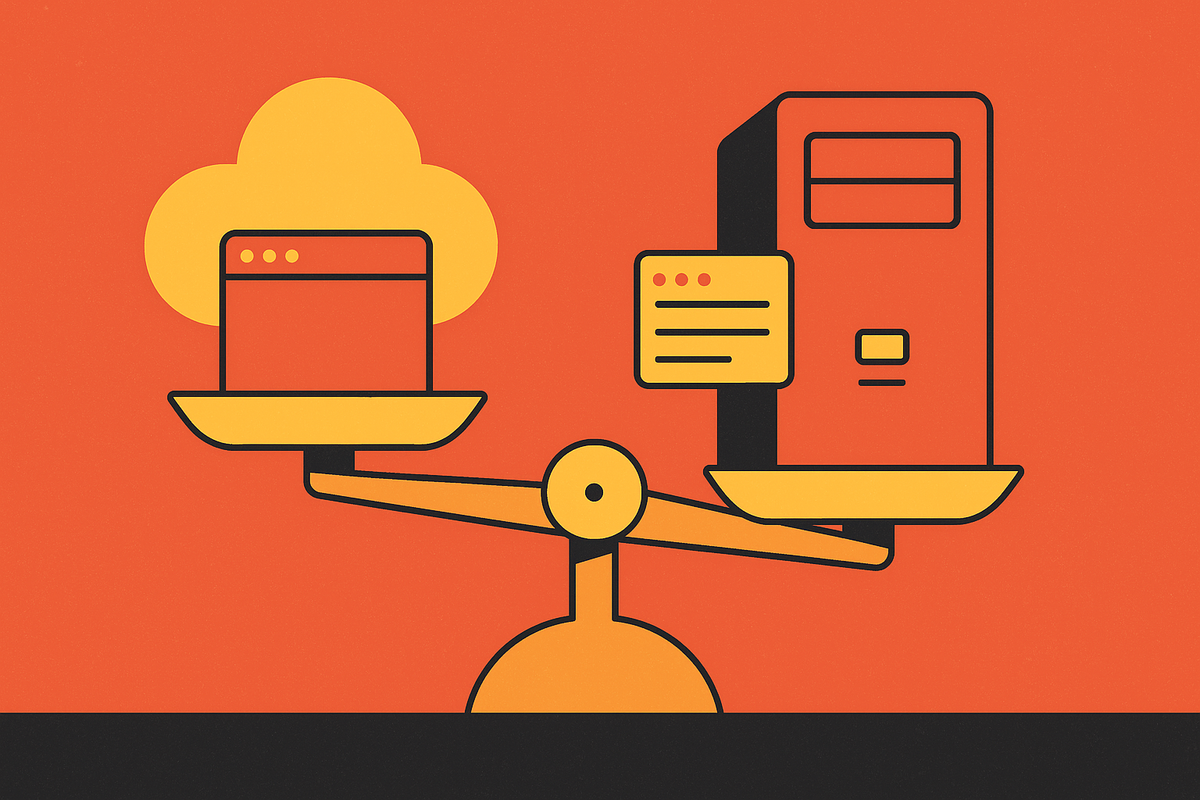
How Self-Managed Security Platforms Deliver Enterprise Policy Enforcement Without MSP Retainers
Small businesses can enforce security controls automatically instead of waiting for an MSP to act.
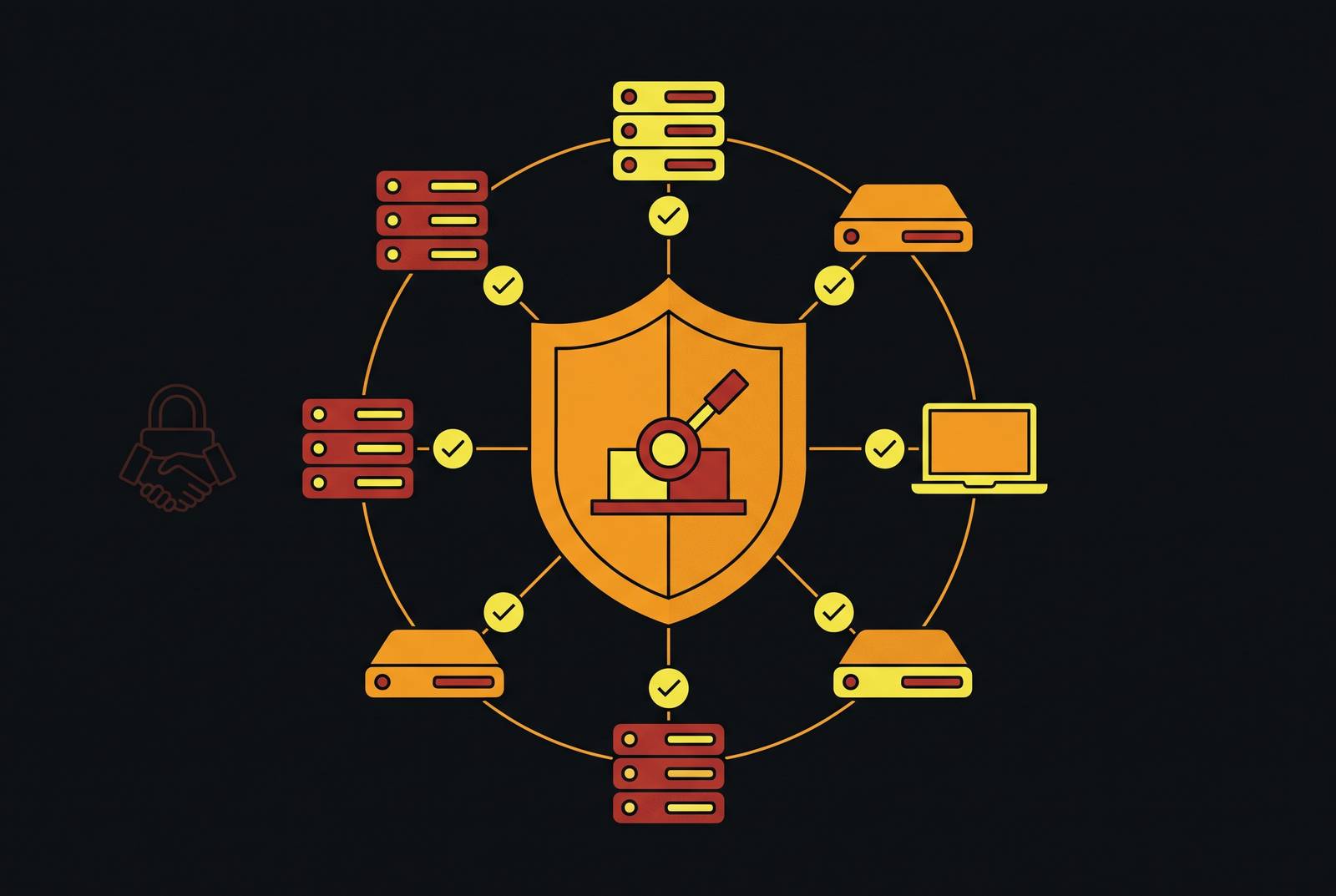
A self-managed security platform is an alternative to an MSP retainer for small businesses that prioritize cybersecurity enforcement over outsourced IT support. It embeds policy enforcement into the platform so controls stay configured, drift gets corrected automatically, and routine protection does not depend on a human handoff.
Why enforcement fails before it ever begins
A laptop looks protected in the dashboard, but its endpoint protection is not running. The business has paid for the tool and may also pay an MSP to manage the device. Neither payment proves that protection is active. Across the fleet, endpoint detection and response can be running on only a fraction of devices while the dashboard still says “covered.” That gap begins with configuration and ownership, before anyone needs to respond to an attack.
Most SMB security failures come from controls that were never fully configured, stopped quietly, or drifted while nobody was watching. Those controls cover devices, identities, and SaaS apps, so someone must be clearly responsible for keeping them enforced in each system. Lean teams rarely have a named owner for each one. When enforcement falls to whoever has time, a tool may report a misconfiguration without anyone correcting it.
What MSPs and MSSPs actually enforce — and where each stops
Managed service providers handle day-to-day IT operations, including devices, networks, accounts, patching, and help desk support. Keeping work moving is their core job. Security often arrives as a manual add-on handled by the same generalists who run the support queue, so a growing queue competes with security work. The model also grew around the office network perimeter, but businesses that run in the cloud now rely more and more on identity controls. Managing a working account is not the same job as continuously enforcing the conditions under which it can access company systems.
Managed security service providers perform a different function. They operate a security operations center that monitors threats and coordinates incident response, but identification does not necessarily include responsibility for remediation. The customer's MSP or internal team may still need to make the fix. Most MSSPs also price and deploy for larger organizations, while smaller customers who get onboarded often receive monitoring and alerting with remediation expected elsewhere. That arrangement can work when the receiving team has the time, authority, and expertise to act.
Managed detection and response is a distinct tier because providers can take pre-authorized containment actions, such as isolating a host or disabling an account. Contracted scope determines what happens next. The structural weakness appears when the party finding a problem is not responsible for fixing it. Then remediation can stall in discussions about scope, even when both providers perform their contracted jobs.
Why the enforcement gap is more dangerous now than a retainer can patch
Attackers do not wait for a support queue to clear. AI-driven automation, Ransomware-as-a-Service platforms, and pre-built exploit kits let them scan the internet for vulnerable businesses in seconds. That speed exposes the weakness of periodic enforcement. A misconfiguration that waits for a monthly report or quarterly review remains available to an attacker in the meantime. Paying a retainer does not shorten that window unless the service actually changes how quickly controls are corrected.
Verizon's 2026 Data Breach Investigations Report found ransomware in nearly half of all breaches, and roughly 96% of ransomware victims whose size was known were small organizations. Small businesses are not merely incidental targets. They hold valuable data, often have weaker defenses than enterprises, and can give attackers a way into larger clients through supply-chain relationships. The report also found a third party involved in a majority of SMB breaches. An MSP or technology provider is therefore both a source of support and a potential attack vector.
SMBs depend on mobile and remote devices while thinly staffed IT teams must keep coverage intact across them. A device's policy state can change between reviews, even if someone marked it compliant before. The consequence is a mismatch between the speed of exposure and the pace of human review. Closing that mismatch requires enforcement that runs between check-ins, rather than a larger pile of findings at the next meeting.
How continuous enforcement works inside a self-managed platform
Instead of identifying issues for another party to fix, the platform builds the security framework, selects and deploys the tools, configures controls, and keeps enforcing them. The gap stays open with a shared dashboard if someone still has to turn every warning into a separate task to do by hand. Enforcement requires the system to act on the policy it monitors.
An unencrypted drive makes that difference concrete. When a device falls outside the required policy, the platform detects the violation and corrects it without waiting for a human review cycle. Missing operating system updates and disabled screen locks follow the same pattern. Endpoint management, posture monitoring, and automated remediation work together, and security violations can also create IT tickets automatically. Ticket creation supports the workflow, but it is not a substitute for the correction itself.
Posture checks, device trust, and access controls link protection to the identity layer, while onboarding and offboarding linked to a human resources information system keep device and access provisioning in step with HR events. That saves people from having to coordinate the work across separate tools. As the fleet grows, so does the security work done by hand, and that work must compete for attention when priorities change. Automated enforcement reduces that dependence, allowing lean teams to maintain consistent controls without assigning a person to perform every routine check and fix.
What the control stack should cover and in what order
For a buyer, the practical checklist should follow attack paths. It is a continuous enforcement sequence. Multifactor authentication comes first because it blocks the majority of credential-based attacks and offers the highest impact per dollar. It is also often included in existing software licenses at no additional cost. A platform should keep MFA enforced wherever it is required, including after the first rollout.
Endpoint detection and response is the first meaningful paid investment. Its real-time visibility and behavioral detection go beyond what signature-based antivirus can provide. Detection still needs an enforcement layer around it. A self-managed platform can work above the EDR a business already has, adding policy enforcement and compliance while keeping the detection tool it has paid for. This separates two useful jobs, identifying suspicious behavior and keeping the protection itself deployed and correctly configured.
Tested backups come next because recovery depends on restoration. The control is verified restoration, which proves that the business can use its backup when needed. That makes backups a different kind of checkpoint from threat detection.
Automated patching with verification follows because an intended update does not prove that vulnerable software has been fixed. Verizon identified exploitation of unpatched software as the most common known entry point in SMB breaches in its 2026 report. Email security with phishing protection belongs next in the sequence. The UK Cyber Security Breaches Survey found that phishing was the most common type of attack reported, so email protection also tackles a way that attacks reach businesses.
A full SIEM platform should not take priority for a team with nobody to read its alerts. It requires an analyst to be useful. For the enforcement job described here, the platform's built-in posture monitoring is the substitute lean teams need first. More alerts do not resolve a shortage of people available to act on them.
Why consolidating the stack is itself a security decision, not just an operational preference
A small business may run device management, endpoint protection, compliance, and ticketing through different vendors, each with its own console, agent, and reporting. Someone must reconcile the differences between them. For a lean team, that work creates visibility gaps, alert fatigue, and uncertainty over who owns the next step.
Over-privileged identities, stale tokens, internet-facing misconfigurations, and untested response playbooks can remain unresolved even where separate tools report their own coverage. A unified platform maps device posture, identity status, and compliance evidence to one data model. The shared data model makes a control slipping in one layer visible in the others without manual reconciliation.
A security questionnaire can stall a deal, or an audit eight weeks away can reveal that the available evidence consists of screenshots from six months ago. Those are consequences of fragmentation. Bringing device-level compliance, access logs, and policy enforcement records together gives the business what it needs to build audit-ready evidence. Assembling those records from six separate tools under deadline can instead cause a company to fail an audit it should pass.
Consolidation must also settle who owns the outcome. When five vendors each cover one slice, none may be accountable for whether the whole control stack remains enforced. A built and managed security platform takes responsibility for that joined-up enforcement job. The relevant distinction is whether the platform's capabilities share the policy, corrective action, and evidence needed to prevent responsibility from disappearing between them.
How should a small business evaluate a self-managed platform against an MSP retainer?
A company making its first serious security investment should compare models by the work it needs done. An MSP fits the need for day-to-day IT support. An MSSP fits threat monitoring and response coordination when a team can receive and act on its output, while a managed detection and response service adds action within a negotiated containment scope. A self-managed platform keeps policy enforcement running without needing a person at every routine handoff. Replacing the cybersecurity part of an MSP arrangement does not mean replacing its help desk or other operational work.
The retainer comparison starts with responsibility when something fails. Who fixes a control that drifts, and what is the SLA? What happens if the MSP and MSSP disagree about whose scope includes remediation? A buyer should also ask whether detection runs continuously or depends on periodic reviews, and what audit evidence the provider supplies and in what format. Those answers reveal more than a broad promise to “manage security.”
Does deployment require professional services, or is it guided and self-contained? Are policies pre-configured to a sensible baseline, or must the customer define every rule? The buyer should ask whether enforcement covers device management, identity, and compliance together, and how a non-security generalist sees and resolves drift. A platform that merely hands configuration and remediation work back to the customer preserves the same ownership problem under a different contract.
Enterprise MSSP pricing, seat minimums, and long deployments can put the service out of reach for small businesses before protection starts, while a platform that takes weeks rather than months to deploy changes what works for them. For a business with one or two IT generalists, the first security purchase should provide a running program. The model worth buying first is the one accountable for keeping controls enforced without a human handoff at every step.