Consistent Security Policy Enforcement Without a Managed Service Contract
SMBs can automate routine security controls without paying for managed services.
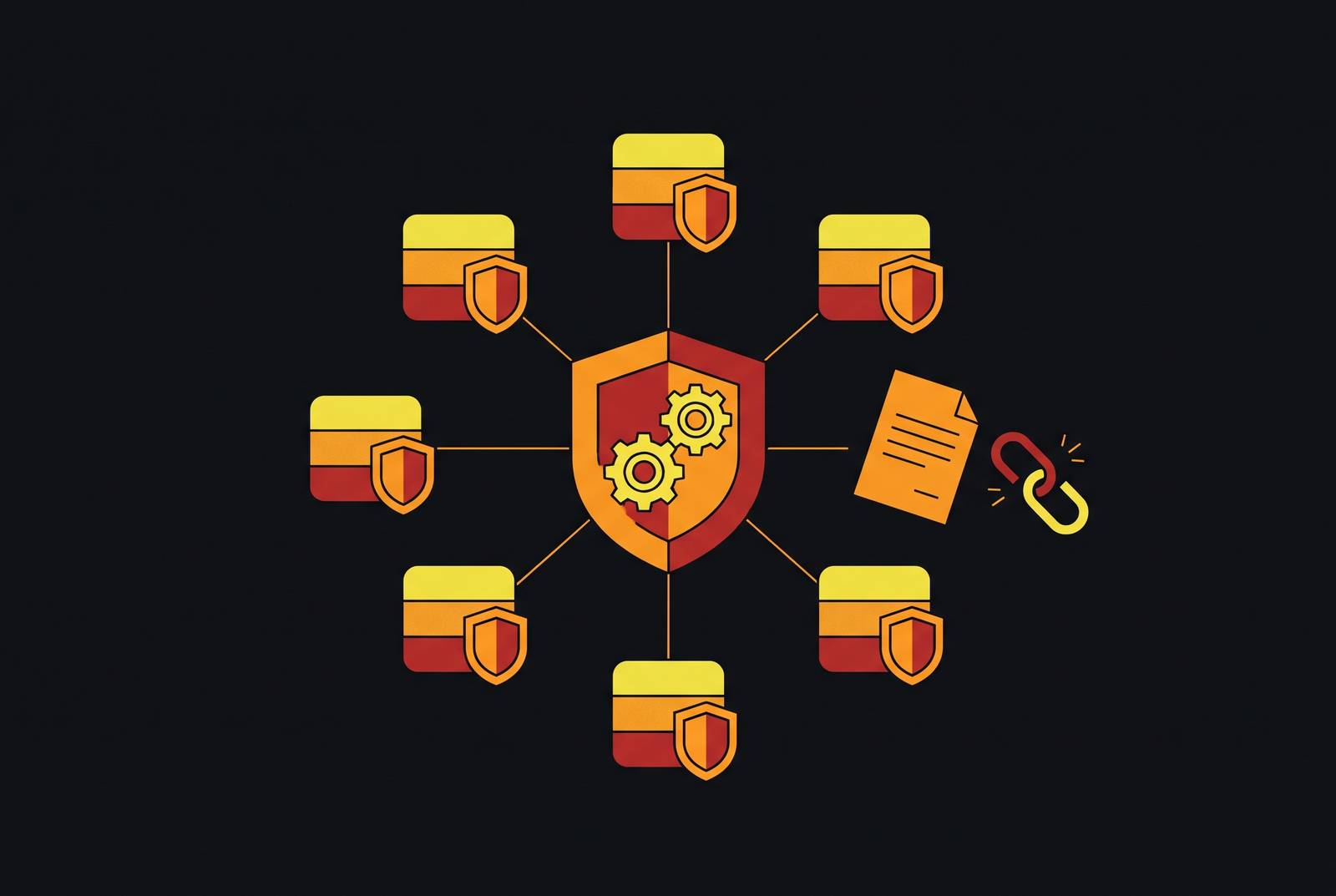
Consistent security policy enforcement without a managed service contract requires an integrated platform that applies, checks, and corrects controls automatically. For resource-constrained SMBs, that is an alternative to paying a managed service provider to oversee routine enforcement. This keeps incident-response expertise separate from the day-to-day work of maintaining controls.
Why SMBs get breached despite having security tools in place
A former employee still has active credentials two weeks after offboarding. A laptop misses three patch cycles because nobody notices. Both can happen when strong tools are installed but their use depends on someone remembering to check, follow up, or finish a task. The breach opportunity sits between the rule and the habit.
That gap is structural. SMBs face sophisticated threats without the dedicated teams that larger businesses have to configure tools, watch alerts, and act consistently. Without a clear inventory of devices and accounts, it is hard to know which ones are covered. Without defined responsibilities, alerts can sit unaddressed. Adding another tool does little if nobody connects its findings to a corrective action.
Credential-based attacks make this weakness especially plain. Attackers can log in rather than break through defenses, so stale access can undermine otherwise strong protection. An access policy does little to stop an attacker if the system does not apply it to the account being used. The same distinction holds for devices that appear in an inventory but no longer meet the required settings.
What "consistent enforcement" actually means in practice for a lean team
Consistent enforcement means a control is active and verified on every covered device and account at all times. A system applies it continuously. The policy defines the required state, and the control makes that state real. A written requirement becomes useful protection only when someone can test whether it is operating.
The practical tests are simple and specific. When an employee leaves, access revocation follows the offboarding event. When a device uploads a file, access rules already determine who can see it. When an employee disables a required screen lock, the platform detects the change and corrects it automatically.
For a lean team, this also requires clear authority. If a manager must phone three people before an access or device decision can take effect, the process still depends on a handoff. Periodic review can expose that weakness, but it cannot provide protection during the interval between checks. Auditing and enforcement therefore serve different purposes. One examines what happened, while the other keeps the required control operating.
Why a managed service contract is a poor substitute for platform-level enforcement
A managed service provider is an understandable answer when a business lacks security staff. The provider has people to do work that the internal team cannot take on. But a contract sets responsibilities and response windows. It does not, by itself, make a control continuous, connect separate tools, or give every responder authority to act.
The sharpest example is containment in the early hours. A security operations center detects a compromised endpoint but must email through several approval layers before isolating it. Detection has worked, but containment is still waiting. If the customer’s IT contact must authorize or perform the fix, the service depends on that person’s availability. Round-the-clock monitoring is not the same purchase as round-the-clock enforcement.
This follows from how an MSP has traditionally worked. Help desk support, device setup, patching, and network management focus on uptime and productivity, while threat enforcement requires explicit authority and a security operations function. Managing that arrangement also takes internal time. Someone still defines scope, reviews reports, escalates unresolved issues, and revisits the agreement as the environment changes.
Expertise remains a legitimate reason to buy services. Incident response can require judgment that a small business does not have in-house. Routine control application is a different need, because it depends on repeatable automation. A provider can use such automation, but the enforcement comes from the configured platform. Separating those needs makes the comparison more useful than treating every security task as a staffing problem.
What should replace an MSP for security enforcement?
An integrated platform replaces routine human checks with controls that detect and correct departures from approved settings. For devices, that includes unencrypted drives, missing operating-system updates, disabled screen locks, and unauthorized software. Automated remediation replaces the cycle of reviewing a report and manually putting each device back into the required state. A dashboard that shows the problem but leaves the fix untouched has not removed the task.
When provisioning and de-provisioning are linked to the HR information system, they replace the manual leaver process that can leave former employees with active credentials. SaaS access management and shadow IT detection replace periodic checks that uncover unauthorized access or applications only after the fact. Native compliance reporting reduces manual audit preparation and reconciliation.
The contrast is a stack with separate device management, endpoint security, compliance, and ticketing tools. Each may perform its own job well. Yet alerts from one tool may not reach the console watched by the person responsible for another, leaving the team to reconcile the pieces. Integration bridges that gap between tools by linking what they show to what gets done. Its value depends on whether the connection actually works across the covered environment.
For businesses running Microsoft 365, Entra ID, Intune, and Purview already contain enforcement controls. Those controls still need to be configured and activated. The policy’s role is to define how the business uses them consistently. This makes existing platform capabilities part of the replacement decision.
The five controls that must be enforced continuously, and what enforcement requires for each
MFA across all critical systems protects against credential-based entry in those systems as well as in email. To enforce the policy, the identity platform must require MFA wherever it applies. A manager’s informal “quick exception” cannot become an untracked bypass. The exception path itself needs escalation and logging, so an exception remains part of the control.
Least-privilege access limits accounts to the access they need, while prompt revocation closes the opening left by departed employees. Enforcement means offboarding automatically revokes access across the connected systems. A checklist lists work that someone still needs to do. When employment ends but application access remains, the task has passed from HR to IT without a completed action. An automated workflow removes that routine dependency on a person finishing the handoff.
Modern threats can change faster than signature-based detection can respond, while endpoint detection and response, or EDR, watches behavior and can block malicious activity before it runs. To enforce the control, every managed device must have an agent that is running. Device health must be reported continuously, with deviations triggering automated remediation.
Patch management and vulnerability remediation deal with known weaknesses in systems. The work includes identifying, prioritizing, testing, and applying updates. To enforce this control, the system must keep checking patch status and start automated deployment or a ticketed escalation when patches are missing. An escalation makes unresolved patch work explicit, whereas a monthly review can leave the missing update unnoticed until the next check.
Backup integrity means the copied data can be used to recover. CISA notes that many ransomware victims had incomplete or damaged backups and stresses regular tests of partial and full restores. Backups also need protection from unauthorized access and separation from the systems they restore. Enforcement means completion and integrity are automatically verified after each backup cycle, with restoration tests scheduled. Recovery cannot be assumed just because a backup job exists.
How compliance and cyber-insurance requirements are reshaping what "enforcement" must prove
Compliance frameworks and cyber-insurance underwriters increasingly ask for evidence that controls operate. This changes what a business must retain. Written evidence needs to show that controls are defined, followed, and reviewed, because solid practices without a documented trail may not satisfy a review. The control must work, and the business must be able to demonstrate that it worked.
HIPAA, PCI DSS, and SOC 2 make demonstrable, ongoing controls relevant beyond a single assessment. HIPAA requirements include risk assessments, access controls, encryption in transit and at rest, and audit logs, with implementation documented. SOC 2 is also increasingly expected by enterprise customers and partners before they share data with an SMB vendor. A security claim may need to withstand a customer’s scrutiny as well as an auditor’s.
A platform that monitors device posture continuously and produces audit-ready reports can automate evidence collection for those controls. A periodic managed-service report may not show their state throughout the intervening period. However, automated evidence is not the whole compliance program. Frameworks also call for workflows that people run, so some reviews and responsibilities remain with people even when software is in place. The useful forcing function is precision about what was enforced, for which systems, and over what period.
Evaluating whether a platform actually enforces policy or just reports on it
The buyer’s first test is whether a finding leads to a correction without someone intervening. Ask what happens when a device has a missing patch, disabled encryption, or unauthorized software. Require the vendor to distinguish automatic remediation from a ticket that waits for action. A visible problem is not a corrected problem. A compliance dashboard number is useful only if the buyer also understands what maintains the underlying state.
The next questions concern identity and authority. Ask whether an HR offboarding event revokes access across all connected systems or merely notifies someone to complete a checklist. Ask whether an MFA exception requires escalation and logging, or whether a manager can approve it informally outside the system. Then ask what happens when nobody is logged into the management console. Routine enforcement should keep running when nobody is watching.
Evidence provides another practical dividing line. Ask for an audit trail of control states over time. A report generated on request can be useful, but it does not establish that evidence was maintained continuously. Also ask how the platform connects device management, endpoint protection, identity, and compliance functions. Separate tools can enforce individual controls while still leaving gaps between their consoles and workflows.
For a lean SMB, the baseline should include multi-OS endpoint management, automated security posture remediation, compliance reporting against recognized frameworks, and identity-connected provisioning and de-provisioning. Deployment should be measured in weeks, with policy enforcement active from day one. A platform that needs months of professional services works in a different way. The final distinction is straightforward. Human expertise may still be needed for an incident, but routine policy enforcement should not wait for a human to begin work.